
How Are Surfactants Used for Coatings and Adhesives?
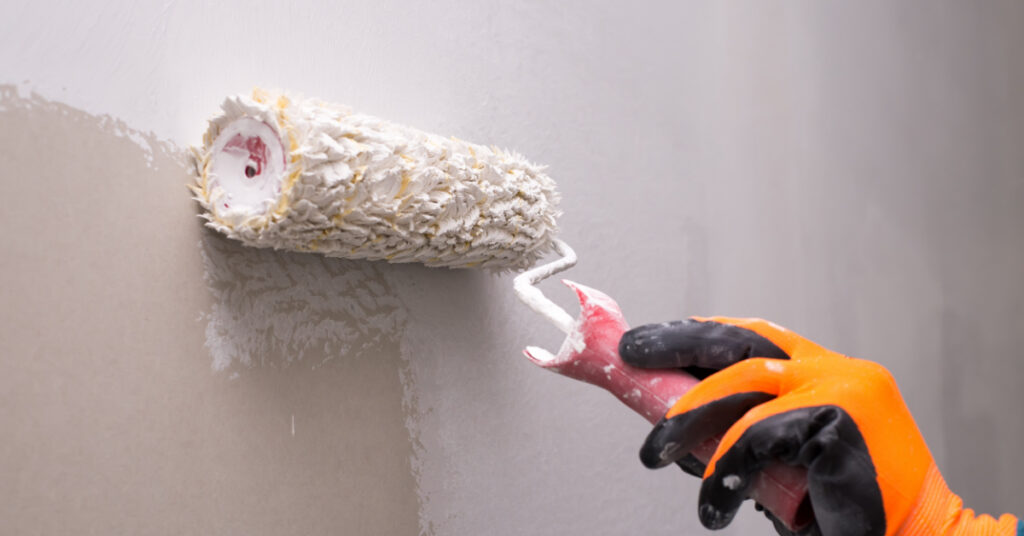
Walk into any room and you’re surrounded by coatings: the paint on the walls, the finish on the furniture, the protective layer on your phone screen. Each of these products started as a liquid formulation that had to spread evenly, adhere properly, and dry without defects.
Surfactants make it possible. These surface-active molecules sit at the interface between incompatible materials and solve problems that would otherwise ruin a coating or adhesive formulation. For manufacturers working with CASE chemicals in coatings, adhesives, sealants, and elastomers, understanding how surfactants function is essential. This knowledge helps formulations perform consistently across different substrates and application conditions. It also frames how different surfactant functions are applied within a formulation.
The Science of Surface Tension
Surface tension is the reason surfactants matter in coatings and adhesives. Water’s naturally high surface tension causes it to bead up on surfaces instead of spreading into a uniform film, and many coating systems behave the same way. When surface tension remains too high, coatings fail to wet the substrate properly, leading to defects such as crawling, beading, or bare spots.
Surfactants address this by concentrating at interfaces and lowering the energy required for one material to spread across another. Each molecule contains a hydrophilic head and a hydrophobic tail, allowing it to interact with both polar and non-polar components. This structure enables surfactants to bridge otherwise incompatible materials and promote uniform coverage.
Within coatings and adhesives, this same interfacial behavior supports several distinct functions, each tied to a specific performance need in the formulation, from wetting and dispersion to foam control and adhesion.
Wetting Agents: Achieving Complete Coverage
The most visible role of surfactants in coatings is as wetting agents. When a coating is applied to a substrate, it needs to spread uniformly and maintain contact with the surface as it dries. Poor wetting leads to defects that compromise both appearance and performance.
Crawling occurs when the coating pulls away from certain areas, leaving them uncoated. Fisheyes are circular defects caused by contamination that the coating cannot wet over. Orange peel texture results from uneven flow and leveling. Each of these problems traces back to inadequate surface wetting.
Silicone surfactants are particularly effective wetting agents because they reduce surface tension to very low levels, often below 25 mN/m. This allows coatings to spread across difficult substrates like plastics, metals with residual oils, and previously coated surfaces. Fluorosurfactants can achieve even lower surface tensions for the most challenging applications, though environmental concerns have limited their use in recent years.
The amount of wetting agent matters as much as the type. Too little and the coating won’t spread properly. Too much and you risk other problems like foam stabilization, adhesion loss, or surface defects from surfactant migration. Most formulators start with supplier recommendations and then optimize through systematic testing.
Dispersants: Keeping Pigments Stable
Pigments give coatings their color and opacity, but they don’t naturally want to stay suspended in liquid formulations. Without proper stabilization, pigment particles clump together, settle to the bottom of the container, and produce coatings with uneven color and reduced hiding power.
Dispersants are surfactants designed specifically to stabilize pigment particles. They adsorb onto the pigment surface and create a barrier that prevents particles from coming together. This barrier can work through electrostatic repulsion, steric hindrance, or a combination of both mechanisms.
Electrostatic stabilization relies on charged groups on the dispersant molecule that create repulsive forces between particles. This approach works well in aqueous systems but becomes less effective at high ionic strength or in non-polar media. Steric stabilization uses polymer chains that extend from the particle surface and physically prevent close approach. Steric dispersants tend to be more robust across different conditions.
The grinding or dispersion process is where dispersants do their most important work. During milling, mechanical energy breaks apart pigment agglomerates while the dispersant coats freshly exposed surfaces. Proper dispersant selection can dramatically reduce grinding time, lower energy consumption, and produce finer particle sizes with better color development.
Long-term stability depends on maintaining this dispersed state through storage, application, and film formation. A well-designed dispersant system keeps pigments suspended for years on the shelf and prevents flocculation during the stress of application.
Defoamers and Antifoams: Controlling Air Entrapment
Foam is the enemy of good coatings. Air bubbles trapped in a wet film create pinholes, craters, and surface defects when they escape during drying. In severe cases, foam can make a coating impossible to apply properly.
The distinction between defoamers and antifoams is subtle but important. Antifoams prevent foam from forming in the first place. Defoamers destroy foam that has already formed. Many products function as both, but the mechanisms differ slightly.
These products work by destabilizing the thin liquid films that surround air bubbles. They spread rapidly across the bubble surface, displace the stabilizing surfactants, and cause the film to rupture. Silicone-based defoamers are highly effective but can cause surface defects if used improperly. Mineral oil defoamers are gentler but may be less powerful. Polymer defoamers offer a balance of effectiveness and compatibility.
Timing and dosing require careful attention. Adding defoamer during the grinding stage helps control foam generated by high-shear mixing. A second addition at letdown addresses foam from subsequent processing. Post-addition defoamers handle foam generated during application. Using too much defoamer can cause cratering, poor intercoat adhesion, or haze in clear coatings.
Adhesion Promoters: Bonding to Difficult Substrates
Some surfactants go beyond surface tension reduction to actively improve adhesion between coatings and substrates. These adhesion promoters contain functional groups that can bond chemically to both the substrate and the coating matrix.
Silane coupling agents are the most common example. One end of the molecule reacts with hydroxyl groups on glass, metal oxides, or mineral fillers. The other end contains organic functionality that co-reacts with the coating resin. The result is a covalent bridge between substrate and coating that dramatically improves adhesion, especially under wet conditions.
Phosphate ester surfactants provide adhesion promotion on metal substrates through a different mechanism. They form stable complexes with metal ions at the surface, creating an anchor point for the coating. This approach is particularly valuable for aluminum and galvanized steel, which can be difficult to coat reliably.
In adhesive formulations, surfactants play similar roles. They help the adhesive wet out the substrate surface, displace air and contaminants, and establish intimate contact that allows bonding mechanisms to operate. Without proper wetting, even the strongest adhesive chemistry cannot develop its full potential.