
How Silicone Defoamers Work: Common Applications, Benefits, and Selection Criteria
Foam appears where you least want it. In a paper mill, it slows drainage and creates holes in the finished sheet. In a wastewater treatment plant, it overflows containment and disrupts biological processes. In a paint can, it leaves pinholes and craters that ruin the coating. Every industry that works with liquids eventually confronts the foam problem.
Silicone-based defoamers have become the go-to solution for many of these challenges. Their unique chemistry allows them to work at remarkably low concentrations, often just a few parts per million, while providing fast knockdown and lasting foam prevention. For a specialty chemical manufacturer seeking reliable foam control, understanding how these products work and where they excel is essential to selecting the right solution. As a domestic defoamer manufacturer, Ascent Chemicals has helped customers across industries find the silicone defoamer formulation that matches their specific process conditions.
Why Silicone Chemistry Excels at Foam Control
The effectiveness of silicone defoamers traces back to fundamental properties of polydimethylsiloxane, the base polymer in most formulations. This material has exceptionally low surface tension, typically around 20-21 mN/m, which allows it to spread rapidly across aqueous surfaces. It also has very low solubility in water, ensuring it remains at interfaces where foam forms rather than dissolving into the bulk liquid.
When a silicone defoamer contacts foam, it spreads across the thin liquid films that form bubble walls. This spreading displaces the surfactants and proteins that stabilize those films. Without stabilization, the films thin rapidly and rupture, releasing the trapped air. The process happens in seconds, which is why silicone defoamers provide such dramatic visual knockdown of existing foam.
The same properties that make silicones effective defoamers also make them persistent. Because they don’t dissolve into the aqueous phase, silicone defoamers remain available at surfaces to prevent new foam from forming. A single addition can provide hours of protection in many applications, reducing the need for continuous dosing.
Modern silicone defoamers are rarely pure polydimethylsiloxane. Formulators modify the base polymer and combine it with hydrophobic particles, emulsifiers, and carrier fluids to optimize performance for specific applications. These modifications affect spreading rate, compatibility with the process fluid, persistence, and potential side effects like surface defects in coatings.
Pulp and Paper Manufacturing
The paper industry was among the first to adopt silicone defoamers at scale, and it remains one of the largest consumers today. Foam forms at multiple points in papermaking, from pulping and washing through the paper machine itself. Each stage presents different chemical environments, including high alkalinity in pulping and surfactant-rich white water systems, which can significantly impact defoamer performance. Each location presents different chemistry and different consequences if foam goes uncontrolled.
In the pulping process, foam interferes with washing efficiency and chemical recovery. Black liquor foam in kraft mills can overflow tanks and create safety hazards. Brown stock washers lose efficiency when foam prevents proper drainage. Silicone defoamers added to these systems improve washing, reduce chemical losses, and prevent overflow incidents. In many systems, early-stage dosing is more effective than reactive addition, as preventing foam formation improves overall washing efficiency and reduces chemical carryover.
On the paper machine, foam in the headbox creates holes and weak spots in the finished sheet. Foam in the white water system causes drainage problems and sheet formation defects. The high temperatures and mechanical shear of papermaking demand defoamers that remain effective under stress. Silicone emulsion defoamers formulated for paper machines balance knockdown speed with persistence through the forming section. Ascent’s EtnaFoam SE 20 and other tunable silicone emulsion defoamers are designed for these conditions, providing effective foam control under high shear and elevated temperatures commonly found in papermaking systems. .
The paper industry also illustrates an important consideration with silicone defoamers: potential interference with downstream processes. Residual silicone on paper can affect printability and coating adhesion. Formulators have developed low-residue silicone defoamers and silicone-free alternatives for applications where this matters. In these cases, non-silicone or low-residue defoamer technologies such as oil-based or specialty “free-rinsing” formulations like Ascent’s Etnafoam SE-FR 3 may be used to balance foam control with downstream performance requirements.
Water and Wastewater Treatment
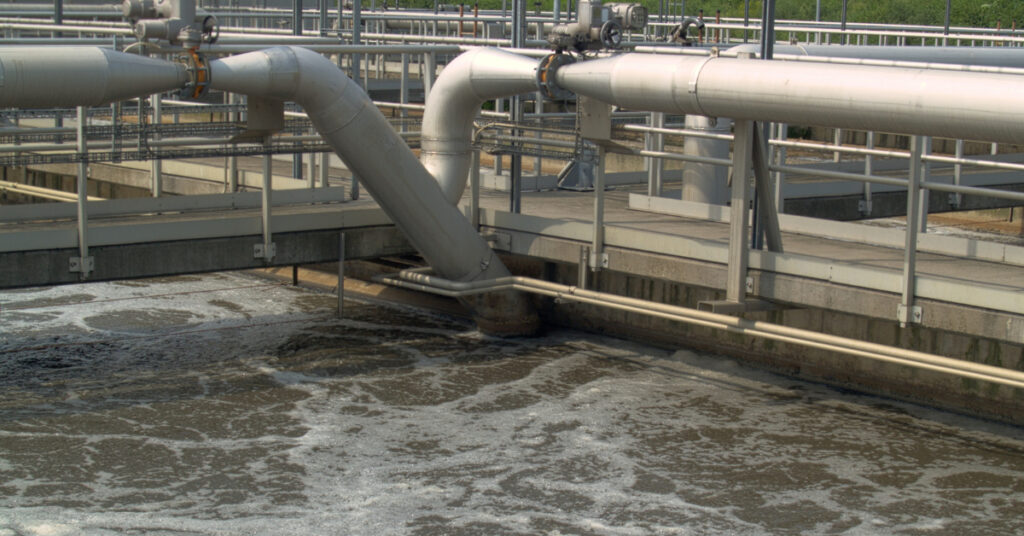
Municipal and industrial wastewater treatment plants face foam challenges that differ significantly from manufacturing environments. Biological treatment processes generate foam through the action of filamentous bacteria and the presence of surfactants in incoming waste streams. This biological foam can be remarkably stable and difficult to control.
Aeration basins are the most common trouble spot. Air injection creates the oxygen transfer needed for biological treatment, but it also generates foam when conditions favor foam-forming organisms. Severe foaming can cover entire basins, overflow containment, and create odor and aesthetic problems. In cold weather, foam can freeze into solid masses that damage equipment.
Silicone defoamers provide rapid knockdown of biological foam and are often used to control visible surface foam or upset conditions in wastewater systems. However, they are not always the optimal solution for continuous treatment processes. Overapplication can reduce oxygen transfer efficiency and introduce additional load into the system, which may negatively impact biological performance.
As a result, many wastewater operations evaluate non-silicone defoamer technologies for ongoing foam control. Bio-based, oil-based systems, such as EtnaFoam OB ECO+ can provide effective foam suppression while minimizing interference with biological treatment processes. These formulations are often preferred in applications where sustainability, system compatibility, and long-term process stability are critical considerations.
Industrial wastewater presents different challenges depending on the source. Food processing waste often contains proteins and fats that stabilize foam. Chemical manufacturing waste may contain surfactants designed to foam. Silicone defoamers work across this range, but optimal formulation varies with the specific waste chemistry.
Silicone Defoamers in Coatings and Adhesives
The coatings industry uses silicone-based defoamers extensively, but the application demands careful formulation to avoid creating new problems while solving the foam Air entrapped during manufacturing and application creates surface defects that compromise both appearance and performance. Silicone defoamers eliminate this air, but they can also cause cratering, fisheyes, and adhesion problems if used incorrectly.
During paint manufacturing, high-speed dispersion of pigments generates significant foam. Defoamer added at this stage must survive the shear forces of grinding while releasing air from the pigment paste. Silicone compound defoamers with hydrophobic silica particles work well here, providing both immediate knockdown and lasting protection through the dispersion process.
At the application stage, different concerns dominate. Brush and roller application entraps less air than spray application, but all methods can create bubbles that mar the finished surface. The defoamer must release these bubbles before the coating skins over, but it must not migrate to the surface and create defects of its own.
Modified silicone defoamers address these competing requirements. Polyether-modified silicones offer better compatibility with coating resins while maintaining defoaming effectiveness. Silicone-polyester copolymers can actually become part of the coating film rather than remaining as a separate phase that might cause problems.
Food and Beverage Processing
Food processing presents unique requirements for defoamers because the products must be safe for human consumption. Regulatory agencies including the FDA maintain lists of approved defoamer components and set limits on residual levels in finished foods. Ascent offers a full complement of FDA indirect contact silicone defoamers like EtnaFoam SE-FG 20 for these applications. Silicone defoamers have a long history of safe use in food applications and appear on approved lists worldwide.
Fermentation processes generate foam as a natural byproduct of yeast and bacterial metabolism. Beer brewing, wine making, and industrial fermentation for enzymes and pharmaceuticals all require foam control. Silicone defoamers approved for food contact provide effective control without affecting flavor or product quality.
Cooking and processing operations also generate foam. Potato processing, sugar refining, and vegetable oil production all involve heating aqueous systems that tend to foam. Silicone defoamers reduce foam-related losses and improve process efficiency. In frying operations, silicone additives in cooking oils reduce foaming and extend oil life.
The food industry also uses silicone defoamers in cleaning operations. Clean-in-place systems that use foaming detergents can generate excessive foam that interferes with rinsing and drainage. A small amount of defoamer in the rinse water eliminates this problem.